

Choosing between an electric and diesel scissor lift comes down to more than power — it’s about choosing the right machine for the job. Whether you’re working on an indoor fit-out, navigating uneven outdoor terrain, operating in a warehouse or tackling a busy construction site, each option has its advantages. At Lets Lift Hire, we help Victorian tradies and builders choose the right equipment to work safely and efficiently. Here’s what you need to consider.
Key Takeaways
- Electric lifts suit indoor, flat, quiet worksites.
- Diesel lifts handle rough terrain and outdoor conditions.
- Emissions and noise differ significantly between the two.
- Safety training matters regardless of power source.
- Site conditions should drive your final decision.
What Sets Electric and Diesel Scissor Lifts Apart
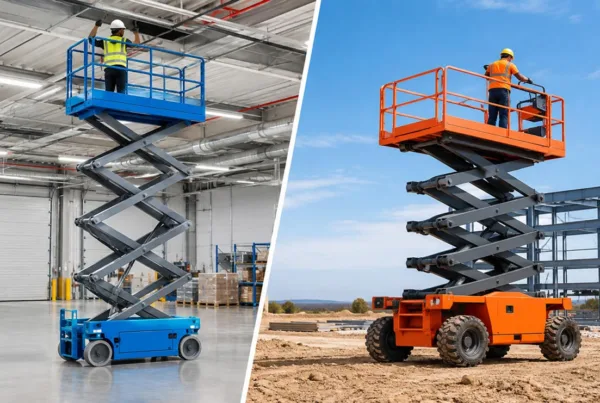
Electric and diesel scissor lifts do the same job, raising workers and materials safely to height, but they get there very differently. Electric models run on battery power, making them quiet, emission free, and gentle on indoor floors. Diesel models run on combustion engines, giving them the grunt and stability needed for rough, uneven, or outdoor ground. Neither is universally better, the right pick depends entirely on where and how you’re working.
Where Electric Lifts Genuinely Shine
Warehouses, retail fit-outs, hospitals, and any site with polished or sensitive flooring are natural fits for electric lifts. Zero exhaust emissions mean they’re safe to run indoors without ventilation concerns, and their quiet operation makes them far less disruptive around staff, patients, or customers. Non-marking tyres protect flooring, and their tighter turning circles suit narrow aisles and doorways. If you’re after our Electric Scissor Lifts range for a smooth, indoor job, that’s usually the simplest and most cost effective choice.
Where Diesel Lifts Earn Their Keep
Step outside onto a construction site, and the calculation changes fast. Diesel scissor lifts handle rough, sloped, or muddy terrain that would stop an electric model in its tracks. Four wheel drive, higher ground clearance, and greater torque make them the obvious choice for civil works, greenfield sites, and anywhere the ground isn’t flat and predictable. Rough Terrain Scissor Lifts at Lets Lift Hire are built specifically for these conditions, with stabilisers and traction that electric models simply can’t match outdoors.
Safety Considerations That Apply to Both
Regardless of power source, elevating work platforms carry real risk if used incorrectly. WorkSafe Victoria reports that Elevating work platforms (EWPs) remain one of the deadliest categories of plant in Victorian workplaces, with fatalities linked to overturning, crush injuries, and contact with overhead structures. Research on EWP manual accessibility found that operators who hadn’t properly reviewed manufacturer safety documentation were more likely to be involved in serious incidents, a reminder that training matters just as much as the machine itself. Coverage in Australian industry safety publications echoes the same message: pre-start checks and proper training aren’t optional extras.
Emissions, Noise, and the Push Toward Electric
Construction is under growing pressure to clean up its act. The Green Building Council of Australia has highlighted that emissions from construction machinery sit at 5 to 10 percent of a typical project’s total footprint, and industry leaders are increasingly favouring electrified plant where the job allows it. Victoria’s own infrastructure projects reflect this shift, Roads & Infrastructure Magazine reported that an electric piling rig on the M80 Ring Road Completion project performs identically to its diesel counterpart while eliminating tailpipe emissions entirely. Sourceable’s coverage of the global shift toward electric machinery suggests this trend will only accelerate as battery costs continue to fall.
Cost and Practical Considerations
Diesel lifts generally cost more to run per hour once you factor in fuel, but they don’t depend on charging infrastructure or downtime for recharging, which matters on remote or fast moving sites. Electric lifts cost less to operate and maintain over time, with fewer moving parts and no fuel costs, but they need reliable access to power and flat ground to perform properly. Weigh up how long you’ll need the machine, how far it needs to travel across site, and whether charging is genuinely practical before locking in your choice.
Making the Right Call for Your Site
Start with the ground, then work backwards. If you’re indoors, on a clean floor, and close to power, electric almost always wins on cost and convenience. If you’re outdoors on uneven or unformed ground, diesel is usually the only realistic option regardless of emissions goals. RMIT’s research comparing total cost of ownership between electric and diesel fleets found that while upfront electric costs remain higher, the gap narrows significantly over a machine’s working life, worth keeping in mind for longer hires. A recent safety alert covered by Safety Solutions and further industry reporting that whichever machine you choose, proper training and site assessment come first. Still unsure? Our team can talk through your site conditions and match you with the right lift before you commit.
Quick questions to help you decide:
- Is the ground flat, indoor, and close to power?
- Do you need to work outdoors on rough or sloped terrain?
- How sensitive is the site to noise or emissions?
- How long do you need the machine for?
- Will charging infrastructure genuinely be available on site?
Conclusion
Electric and diesel scissor lifts both get the job done, the trick is matching the machine to your site, not the other way round. Get the ground conditions, power access, and job length right, and the decision usually makes itself. Still not sure which lift suits your project? Get in touch with our team and we’ll help you choose with confidence.
FAQs:
What’s the main difference between electric and diesel scissor lifts?
Electric lifts run on batteries and suit indoor, flat surfaces, while diesel lifts handle rough outdoor terrain.
Can electric scissor lifts be used outdoors?
Some can on flat, dry ground, but most struggle with slopes, mud, or uneven outdoor surfaces.
Are diesel scissor lifts noisier than electric models?
Yes, diesel engines produce significantly more noise and emissions compared to the quiet operation of electric lifts.
Do I need a licence to operate a scissor lift?
Boom lifts over 11 metres require a licence, while most scissor lifts need adequate documented training instead.
How do I know which lift suits my job site?
Consider ground conditions, indoor or outdoor use, noise sensitivity, and how long you’ll need the machine.
Are electric scissor lifts cheaper to hire than diesel?
Often yes, since they cost less to run, though diesel may suit longer or remote outdoor jobs better.


One Comment