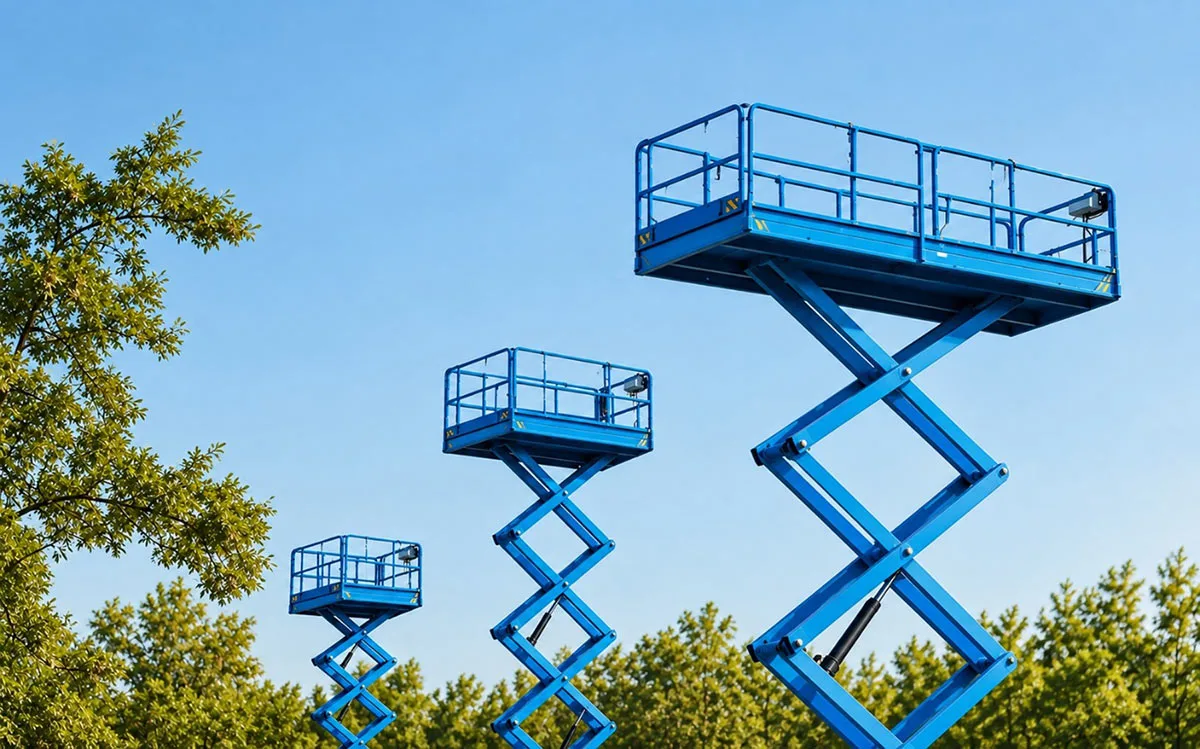
Ordering the wrong size scissor lift is one of the most common, and most avoidable, mistakes on any job site. At Lets Lift Hire, we get asked daily which size actually suits a particular task, and the honest answer depends on far more than just how high you need to reach. This guide breaks down scissor lift sizes properly, so your next hire fits the job the first time.
Key Takeaways
- Platform height and working height are different measurements.
- Compact electric scissor lifts suit narrow indoor spaces.
- Larger models are designed for taller and heavier work.
- Rough terrain scissor lifts are built for uneven outdoor surfaces.
- Doorway width, floor load limits and platform capacity are important considerations.
- Choosing the correct size helps avoid delays, damage and unnecessary safety risks.
Why Size Is The First Question, Not The Last
Establish scissor lift size before booking equipment, not after the rest of the project has been planned. Choosing a machine that is too wide for a doorway, too heavy for a floor or too short for the required reach can cause expensive delays.
Before hiring, consider:
- The maximum height required for the task.
- Doorways, corridors and other access points.
- Floor load limits, particularly on upper levels.
- Whether the work is indoors, outdoors or both.
- The number of workers and amount of equipment on the platform.
Taking a few measurements before booking can save significant time once the machine arrives on site.
Platform Height Versus Working Height: Understanding The Difference
Platform height is the height of the platform floor when fully raised, while working height usually adds around two metres for the operator’s reach. For example, an 8-metre platform height may provide a working height of around 10 metres.
When choosing a scissor lift, consider:
- Platform Height: The actual height of the raised platform.
- Working Height: The approximate maximum height an operator can comfortably reach.
- Task Requirements: Consider the ceiling or work area, operator height, guardrails and tools.
- Avoid Guesswork: Match the lift to the actual task rather than simply the ceiling height.
Common Sizing Mistakes Worth Avoiding
A handful of sizing mistakes come up again and again across different sites and industries, and most of them are entirely avoidable with a bit of upfront planning.
- Ordering based on ceiling height alone, without accounting for the extra reach a person and their tools add.
- Assuming every machine of a given height will fit through a standard doorway, when widths genuinely vary between models.
- Overlooking floor load limits on upper storeys, particularly in older buildings with lower rated slabs.
- Choosing a standard electric machine for outdoor work on grass, gravel, or uneven ground.
- Forgetting to account for overhead obstructions like beams, pipework, or lighting rigs when calculating clearance.
Small Scissor Lifts: Narrow Aisle And Slab Electric Models
At the smaller end of the range sit narrow aisle and compact slab electric scissor lifts, generally offering platform heights between roughly six and eight metres. These machines are built for indoor work where space is tight, doorway widths are standard, and floor loads need to stay light.
- Ideal for warehouse racking, retail fitouts, and general indoor maintenance work.
- Narrow enough to pass through standard single doorways in most cases.
- Zero emission electric operation suits enclosed spaces without ventilation concerns.
- Lighter overall weight reduces the risk of floor damage on standard commercial slabs.
Power source affects the right Scissor Lifts choice for indoor jobs specifically, which is worth reading alongside this size breakdown.
Mid Range Scissor Lifts: Balancing Height And Access
Moving up in size, mid range scissor lifts typically offer platform heights between roughly nine and twelve metres. These machines strike a genuine balance, tall enough for most commercial and light industrial work, while still manageable enough for many standard site access points.
- Suited to ceiling work, signage installation, and general trade work in larger commercial spaces.
- Wider platforms accommodate more than one worker plus materials in many cases.
- Still generally compatible with standard freight lift access, though this should always be confirmed beforehand.
- A common default choice for construction sites needing flexible reach without going to full scale equipment.
At this size, the decision starts to shift from purely fitting through doorways toward balancing platform capacity, since carrying tools and materials alongside a worker becomes a bigger factor in day to day productivity on site.
Large Scissor Lifts: Maximum Height For Major Projects
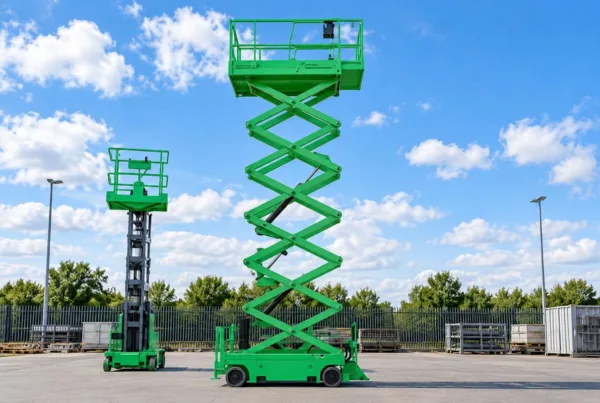
Large scissor lifts can provide platform heights above twelve metres, with specialised models reaching significantly higher. They are generally suited to large warehouses, industrial facilities and major commercial projects.
Larger machines typically provide:
- Greater working height.
- Higher platform capacities.
- More working space.
- Greater stability for suitable outdoor applications.
- Capability for larger-scale projects.
However, their increased size and weight require more planning. Delivery access, turning space, floor loading and site layout all need to be checked beforehand.
Hiring a machine that is substantially larger than necessary can create unnecessary transport and access challenges.
Rough Terrain Scissor Lifts: A Genuinely Different Category
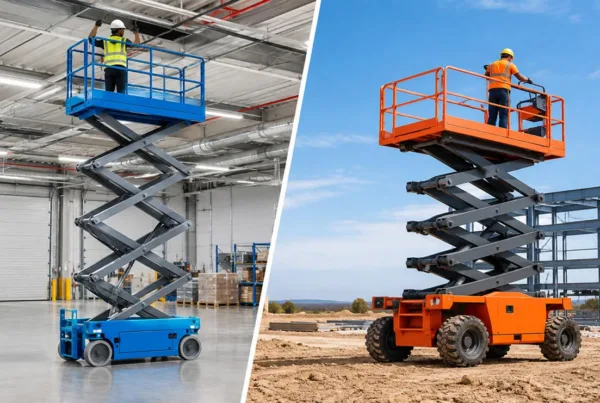
Everything discussed so far generally applies to standard, slab electric scissor lifts designed for flat, indoor or hard paved surfaces. Rough terrain scissor lifts are built for an entirely different environment.
- Larger, more aggressive tyres designed to handle uneven, soft, or sloped outdoor ground.
- Diesel or dual fuel power sources, since electric models are rarely practical for extended outdoor use.
- Higher ground clearance and a more robust chassis built to handle genuinely rough conditions.
- Available across a similarly wide range of platform heights as their electric counterparts.
If a project involves grass, gravel, slopes or uneven ground, the right machine may depend just as much on terrain as working height.
Platform Capacity And Width Also Matter
Height rate is only one part of choosing the right scissor lift. Platform width and rated capacity can have a major impact on productivity.
Before hiring, check:
- Confirm rated platform capacity against the number of workers and weight of materials involved.
- Check platform width and length against the physical space needed to work comfortably.
- Consider extension decks on some models, which add reach without increasing the base machine size.
- Factor in whether tools, fixed equipment, or bulky materials will be traveling up with the operator.
A lift may reach the required height but still be unsuitable if the platform cannot comfortably accommodate the people and equipment needed for the job.
Matching Lift Size To The Actual Job
The right scissor lift should match the conditions and requirements of the specific task. Safe Work Australia’s guidance, reflected in WorkSafe Victoria’s elevating work platform safety standard, points out that selecting the appropriate platform for a given task is one of the central responsibilities employers hold under work health and safety law, alongside proper training and maintenance.
As a general guide:
- Indoor jobs generally favour compact, electric models suited to standard doorway widths.
- Outdoor jobs on uneven ground call for rough terrain models regardless of height requirement.
- Multi storey projects should factor in floor load limits at every level the machine will operate on.
- Tight access sites benefit from measuring corridors and doorways before, not after, booking a machine.
- Long duration projects may benefit from a slightly larger machine than the bare minimum, avoiding a mid project upgrade.
At Lets Lift Hire, electric scissor lift range covers the smaller to mid sized end of this spectrum in detail, with specifications listed clearly against each model to make comparing sizes genuinely straightforward.
Safety And Compliance Considerations Worth Knowing
Selecting the correct size is only one part of safe scissor lift operation. Operators should receive appropriate training for the equipment they are using and understand the machine’s operating limitations.
- Confirm operator training matches the specific type and size of scissor lift being hired.
- Check wind rating limits before using any scissor lift outdoors, since these vary between models.
- Review ground conditions and floor surfaces before elevating, particularly indoors near expansion joints or ramps.
- Keep pre start checks and inspection logs current, since these form part of standard compliance practice.
- Confirm the machine’s certification tags and service history before it arrives on site, not after.
Scissor lift requirements can vary according to the equipment and work environment, so businesses should always follow current Australian workplace health and safety requirements and the manufacturer’s instructions.
Conclusion
Getting the size right from the start makes every job on site smoother, safer, and considerably less stressful. If you are ready to book the right scissor lift for your next project, contact us and our Victorian team will help you find the exact fit, without the guesswork.
FAQs:
What is the difference between platform height and working height?
Platform height measures the raised floor of the machine, while working height adds roughly two metres for reach.
Do I need a licence to operate a scissor lift in Australia?
No High Risk Work Licence is required, though recognised operator training specific to the machine is still expected.
What size scissor lift suits most indoor warehouse work?
Compact or narrow aisle electric models around six to eight metres platform height suit most standard warehouse tasks.
Can a standard electric scissor lift be used outdoors?
Generally not for rough or uneven ground, where a rough terrain scissor lift is the more suitable choice.
How do I know if a scissor lift will fit through my doorway?
Check the machine’s width and length specifications against your doorway measurements before confirming a booking.
Does a taller scissor lift always mean a better choice?
No, matching height, width, and capacity to the actual task matters more than simply choosing the tallest option.