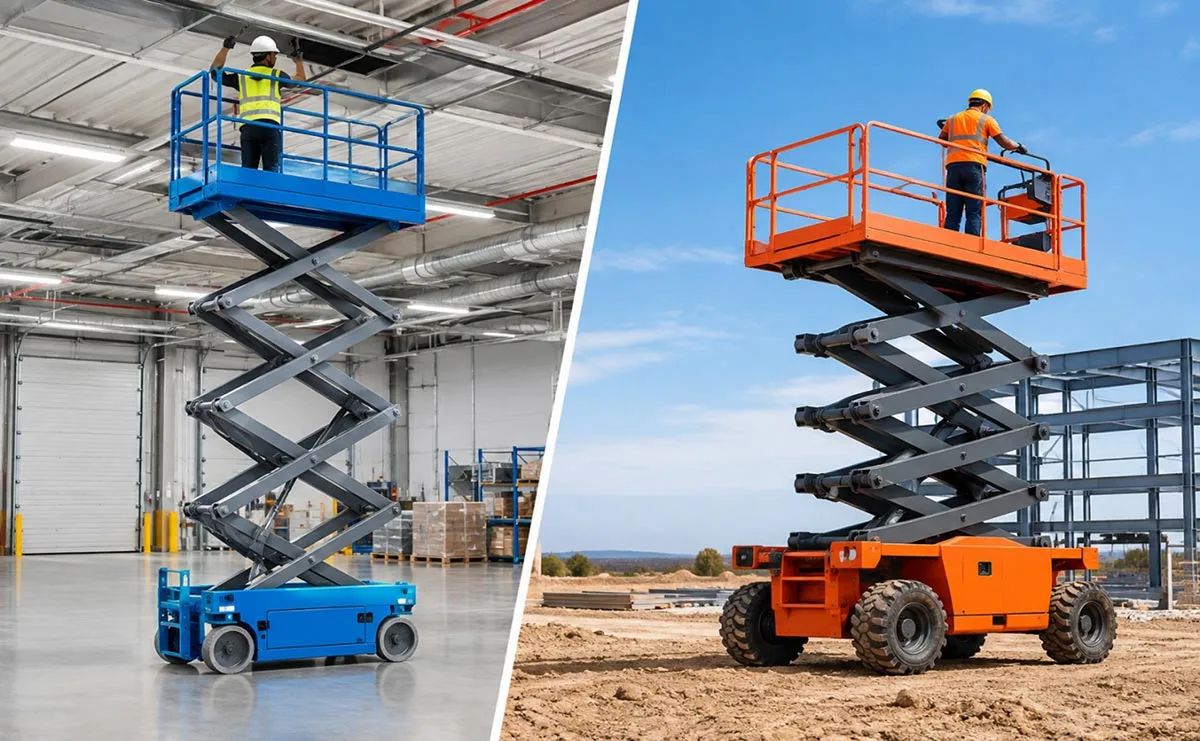
Choosing between an indoor and an outdoor scissor lift shapes how safely and smoothly your job runs. At Lets Lift Hire, we see the same question from Victorian crews every week. This guide explains how the two types differ, where each one performs best, and what to check before you book your next hire.
Key Takeaways
- Indoor lifts are electric, quiet and gentle on floors.
- Outdoor lifts handle uneven ground and wind.
- Always check the wind rating before lifting outdoors.
- Match the lift to the surface, not just the height.
- Trained operators matter as much as the machine.
Why the Right Choice Matters
Working at height is one of the most serious risks on Australian sites. WorkSafe Queensland reports 122 fatalities from falls from heights over five years, which made up 13 per cent of all worker deaths. The pressure has not eased. Industry coverage shows that deaths from falls rose from 17 to 29 between 2022 and 2023.
Victorian data backs up the concern. A Victorian hospital study found that 8,669 of 42,176 work related injury admissions, between 2017 and 2022, were fall injuries.
A scissor lift is a safer option than a ladder or scaffold. Still, it only protects your crew when it suits the site. That is why the indoor versus outdoor decision matters so much.
What Is an Indoor Scissor Lift?
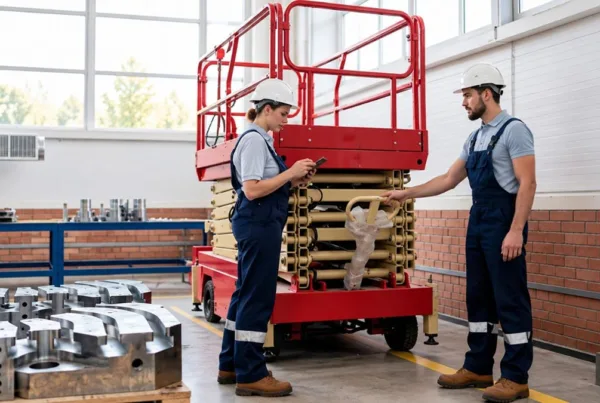
Indoor scissor lifts are built for finished, level surfaces. They run on batteries, so there are no fumes and very little noise. That makes them a good fit for occupied buildings.
- Non marking tyres protect polished concrete and tiles.
- A compact frame moves through doorways and tight aisles.
- Quiet operation keeps shops, schools and offices running.
- Best for lighting, ceiling work, signage and warehouse maintenance.
The limits are clear. Indoor machines need firm, flat floors. Rain, mud, and slopes can quickly make them unsafe. If your project sits inside, electric scissor lifts are a sensible place to start.
What Is an Outdoor Scissor Lift?
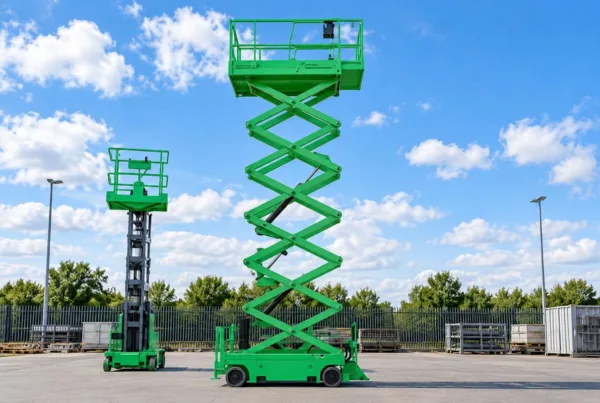
Outdoor machines are made for uneven ground and changing weather. Rough terrain models usually have four wheel drive, wider tyres, and strong levelling systems. When you need a rough terrain scissor lift, these features become particularly useful.
- Better ground clearance for gravel, grass and compacted soil.
- Higher platform capacity for tools and materials.
- Wind ratings that suit open sites.
- Strong drive systems for slopes and building sites.
Wind deserves special care. An equipment guide hosted by Charles Sturt University states that outdoor use requires a minimum wind rating of 12.5 m/s. Always read the compliance plate before you lift.
Fuel type also plays a part. Our article on electric versus diesel scissor lifts helps you weigh noise, emissions and running time.
Indoor vs Outdoor at a Glance
- Power: Indoor lifts use batteries. Outdoor lifts often use diesel.
- Tyres: Indoor tyres leave no marks. Outdoor tyres grip rough ground.
- Surface: Indoor suits flat floors. Outdoor handles slopes and soil.
- Weather: Indoor avoids wind and rain. Outdoor carries a wind rating.
- Noise: Indoor is quiet. Outdoor is louder.
Safety Checks Before You Hire
Even the right machine can fail when the site is not ready. Safety Solutions covered a scissor lift that overturned in January 2022, leaving the operator with serious head injuries. A short plan prevents most incidents.
- Inspect the ground. Look for slopes, soft patches, drains and holes.
- Check the wind rating and the weather forecast.
- Scan for overhead beams, ceilings and power lines.
- Confirm the combined weight of people, tools and materials.
- Complete a pre start inspection every shift.
Here is what recent Australian reporting tells us:
- Two workers were crushed in separate Melbourne incidents involving elevating work platforms.
- A University of Newcastle study, shared by Master Builders ACT, ranked working at heights as the second most common cause of construction injury.
- AMSJ notes that working at height remains among the greatest causes of fatalities on Australian worksites.
- Falls were the second leading cause of worker deaths in 2023, according to SafetyCulture.
Choosing the Right Lift for Your Site
Start with the surface, then the weather, then the height. Many jobs involve both settings, such as a loading dock or a building site with finished floors. In those cases, an outdoor rated electric model may suit. Our team can assess your site and recommend the right match.
Think about your schedule too. Battery lifts need charging time, usually overnight, so plan around your shifts. Diesel units run longer between refuels, which helps on large sites. Ask about site access as well. Narrow gates, steep driveways and tight doorways can limit which machine reaches the work area.
Finally, confirm that your crew has the right training. Operators should know the controls, the emergency lowering system and the exclusion zones. Good preparation costs little compared with a delay or an injury.
Conclusion
Indoor lifts suit clean, level floors. Outdoor lifts suit rough ground and changing weather. The best choice depends on your site, not just your working height. Speak with the team at Lets Lift Hire and get in touch today for honest advice and a quote. We service projects across Victoria and offer next day delivery to most areas.
FAQs
Can you use a scissor lift indoors and outdoors?
Only if the model is rated for both. Check the compliance plate for outdoor use, wind and slope limits.
What is the difference between indoor and outdoor scissor lifts?
Indoor models are electric with non marking tyres. Outdoor models have stronger drive systems, wider tyres and better ground clearance.
How windy is too windy for a scissor lift?
Stop work when wind exceeds the plate rating. Outdoor lifts need a minimum rating of 12.5 m/s.
Do you need a licence to operate a scissor lift?
A high risk work licence applies to boom type platforms of 11 metres or more. Scissor operators still need training.
Can electric scissor lifts be used in the rain?
Avoid wet conditions unless the manufacturer rates the machine for it. Moisture can damage electrical parts and reduce traction.
How high can a scissor lift reach?
Working heights vary by model. Compact electric units suit lower ceilings, while larger rough terrain models reach considerably higher.