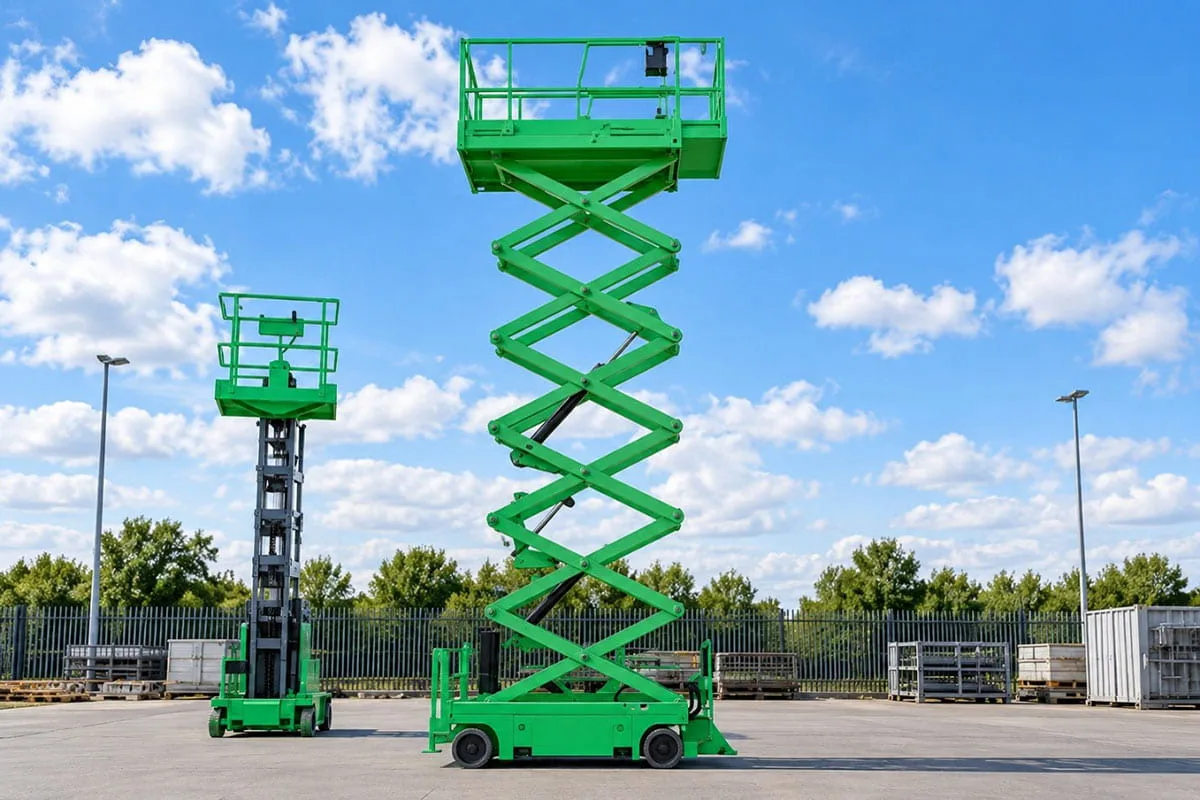
Every job starts with the same question, and it is rarely as simple as it sounds. At Lets Lift Hire, we field this exact question daily, and the honest answer is that scissor lift height comes in a genuinely wide range, built for jobs from a low warehouse ceiling through to a soaring industrial roof. This guide breaks down exactly how high these machines can reach, and what actually determines the right choice.
Key Takeaways
- Scissor lifts generally range from around six to eighteen metres or more in platform height.
- Working height is usually around two metres higher than platform height.
- Rough terrain models are designed for uneven outdoor surfaces.
- Boom lifts are better when horizontal outreach is required.
- Choosing the correct size avoids unnecessary hire costs and access problems.
The Short Answer: Typical Height Ranges
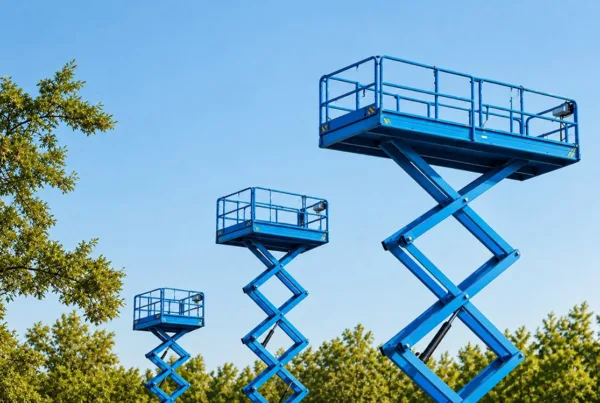
Scissor lifts generally start at around six metres of platform height at the compact end and can extend towards eighteen metres or more in specialised models. Most commercial and maintenance work falls somewhere in the middle.
Typical ranges include:
- Compact and Narrow Aisle Models: Roughly six to eight metres platform height.
- Standard Electric Scissor Lifts: Roughly nine to twelve metres platform height.
- Large Scissor Lifts: Roughly twelve to eighteen metres platform height, occasionally more in specialised models.
- Rough Terrain Scissor Lifts: A similarly wide range, built for outdoor and uneven ground conditions.
Compact And Narrow Aisle Scissor Lifts: The Lower End
Compact and narrow aisle scissor lifts generally provide around six to eight metres of platform height. They are designed for manoeuvrability rather than maximum reach, making them useful for indoor environments where space is limited.
They are commonly suited to:
- Warehouse and retail maintenance.
- Office and commercial ceiling work.
- Areas with narrow access points.
- Jobs where lighter equipment is preferable.
For these applications, access width can be more important than maximum height.
Standard Electric Scissor Lifts: The Middle Ground
Moving up, standard electric scissor lifts typically reach platform heights between roughly nine and twelve metres, covering the vast majority of commercial and light industrial work. This range comfortably handles most ceiling heights found in commercial buildings, warehouses, and larger retail spaces without requiring the bulkier machines reserved for genuinely tall structures.
- Covers most standard commercial ceiling heights without needing to size up further.
- Wider platforms at this range often support two workers plus materials comfortably.
- Still generally practical for indoor use, subject to doorway and floor load checks.
- The most commonly hired height range across general construction and maintenance work.
Power source interacts with this height range, since electric models dominate this middle segment for indoor applications specifically.
Large Scissor Lifts: Reaching Genuinely Tall Structures
At the top of the standard range, large scissor lifts reach platform heights beyond twelve metres, with some specialised models climbing toward eighteen metres or higher. These machines are built for genuinely tall spaces, high bay warehouses, large industrial facilities, and commercial structures with significant vertical scale.
- Suited to warehouse ceilings, large span roof structures, and industrial facility maintenance.
- Considerably heavier and wider than smaller models, requiring more planning around access and delivery.
- Higher capacity platforms support larger crews working at height for extended periods.
- Best reserved for jobs that genuinely need this reach, rather than a default oversized choice.
Rough Terrain Scissor Lifts: Height Without Flat Ground
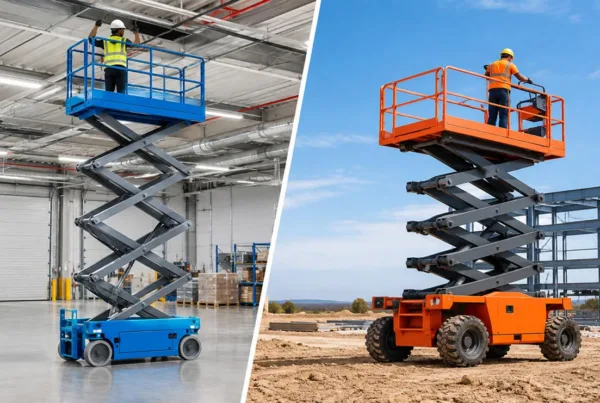
Height capability is not limited to standard electric machines. Rough terrain scissor lifts cover a similarly broad height range, though they are built around an entirely different ground condition, uneven, sloped, or unpaved outdoor sites where a standard electric model simply is not practical regardless of the height required.
- Diesel or dual fuel powered, since electric models are rarely practical for sustained outdoor use.
- Larger tyres and more robust chassis built to handle genuinely rough ground.
- Available across a height range comparable to standard electric scissor lifts.
- The right choice whenever ground conditions, not height, are the deciding factor.
The Tallest Scissor Lifts Available
Specialised scissor lifts can reach platform heights approaching or exceeding eighteen metres. These machines are significantly larger and heavier than compact and standard models, so transportation, site access, ground conditions and stability all require careful consideration.
For most commercial, construction and maintenance jobs, this level of reach is unnecessary. However, it can be valuable for projects involving particularly tall industrial or commercial structures.
Scissor Lifts Versus Boom Lifts For Height
Height alone does not determine whether a scissor lift is the right equipment. Scissor lifts generally travel vertically, providing a spacious platform directly above their base. Boom lifts can move vertically and horizontally, allowing operators to reach over obstacles or access areas away from the machine’s base.
Choose a scissor lift when:
- The work is directly above the machine.
- A larger working platform is useful.
- Workers need space for tools and materials.
Choose a boom lift when:
- Horizontal outreach is required.
- The work area is difficult to access directly from below.
- Operators need to reach over obstacles or structures.
Selecting the correct equipment category is just as important as selecting the correct working height. Master Builders ACT’s coverage of the updated national code of practice for elevating work platforms reinforces that selecting the right category of machine, not just the right height, is a core part of managing safety and efficiency on any site using this type of equipment.
Why “As High As Possible” Is Not The Right Goal
Hiring the tallest machine available may seem like the safest option, but it can create unnecessary costs and access problems. Larger machines are often heavier, wider and more difficult to manoeuvre.
An oversized machine may:
- Struggle to fit through entrances or restricted areas.
- Place additional loads on floors.
- Cost more to hire and transport.
- Take longer to position and reposition.
The goal should be the right height with a sensible safety margin, rather than maximum possible reach.
Regulatory Considerations At Height
Working at height requires appropriate planning, training and risk management. Before operating a scissor lift, check the manufacturer’s requirements and applicable Australian workplace safety obligations. Safe Work Australia’s newly published model Code of Practice for elevating work platforms, released in December 2025, consolidates previous national guidance into a single reference covering hazard identification, risk management, and safe operating procedures for this entire category of equipment. Standards Australia’s most recent update to AS/NZS 1418.10, the core design standard for mobile elevating work platforms, similarly reflects ongoing refinement of structural, stability, and safety requirements as the equipment used across Australian sites continues to evolve.
Important considerations include:
- Ensure operators have appropriate training for the equipment.
- Check wind limits before outdoor operation.
- Confirm ground and floor conditions are suitable.
- Keep inspection and maintenance records current.
- Reassess conditions whenever the machine is repositioned.
Equipment should always be operated according to the manufacturer’s instructions and relevant workplace safety requirements.
Our Rough terrain scissor lift range at Lets Lift Hire covers a broad height spectrum for outdoor and uneven ground work, with full specifications listed against each model to help match height and terrain requirements together properly.
Matching Height To Your Actual Building
The best way to choose a scissor lift is to measure the actual work area rather than estimate its height. Building design, ceiling height, access points and ground conditions can vary considerably between sites. Coverage from Commercial Real Estate on converted warehouse spaces highlights how older industrial buildings often feature notably tall ceilings compared with more compact modern commercial fit outs, a genuine factor worth checking before assuming a standard height range will suit every site.
Before hiring, consider:
- Required working height.
- Required platform height.
- Doorway and access widths.
- Floor or ground conditions.
- Platform capacity.
- Indoor or outdoor use.
- Available space for positioning and manoeuvring.
Providing these details to your hire provider can make it much easier to identify the right machine.
Conclusion
Knowing exactly how high a scissor lift can reach is only useful once it is matched to your actual job. If you would like help choosing the right height and type for your next project, contact us and our Victorian team will help you get it right from the start, without paying for reach you never actually needed.
FAQs:
What is the tallest a standard scissor lift can reach?
Most standard models reach up to around eighteen metres platform height, with rare specialised models slightly higher.
Is working height the same as platform height?
No, working height typically adds around two metres to platform height to account for a person’s reach.
Should I choose a scissor lift or a boom lift for height?
Choose a scissor lift for work directly above the machine, and a boom lift when horizontal outreach is needed.
Can rough terrain scissor lifts reach the same height as electric models?
Yes, rough terrain models cover a similar height range, differing mainly in ground conditions rather than reach.
Is it better to hire a taller machine than I think I need?
Not necessarily, since oversized machines add cost and access challenges without genuine benefit for most tasks.
Do I need special training for taller scissor lifts?
Training should match the specific machine and height range used, regardless of licensing requirements generally.