
Not every job site is flat, dry, and predictable, and that’s exactly where a rough terrain scissor lift earns its keep. At Lets Lift Hire, we get calls from builders and contractors trying to work out whether standard access equipment will cut it, or whether they need something tougher. Here’s how to tell the difference before your project grinds to a halt.
Key Takeaways
- Rough terrain lifts handle uneven, sloped, or soft ground.
- Four wheel drive and auto levelling set them apart.
- Standard electric lifts struggle outdoors on rough sites.
- Site assessment should guide your equipment choice.
- Safety training matters as much as the machine.
What Actually Makes a Scissor Lift “Rough Terrain”
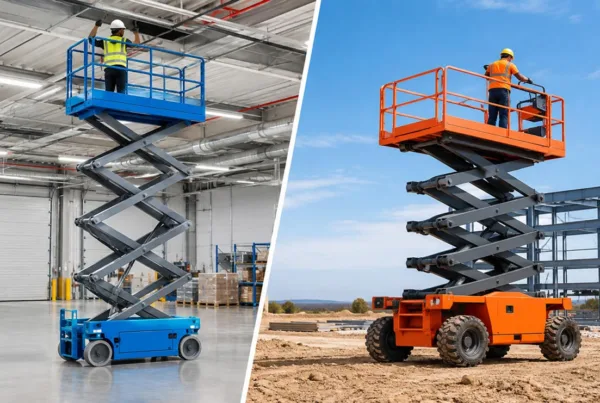
Rough terrain scissor lifts look similar to standard models at a glance, but the engineering underneath is built for a completely different job. Four wheel drive, large pneumatic tyres, auto levelling outriggers, and diesel power give them the traction and stability standard electric lifts simply don’t have. Geotechnical research from Swinburne University into ground bearing capacity and slope stability underlines just how much surface conditions affect any heavy equipment working outdoors, scissor lifts included. They’re designed to handle slopes, soft ground, gravel, and uneven surfaces without tipping or bogging down, which matters enormously once you’re carrying a person and equipment several metres up.
Signs Your Site Needs One
If your ground isn’t finished concrete or compacted, flat gravel, that’s usually your first clue. Muddy paddocks, unformed building sites, sloped landscaping jobs, and anywhere with loose or soft soil all call for rough terrain capability. A standard electric lift might get you through a warehouse fit-out, but roll it onto uneven outdoor ground and you’re risking instability, wheel spin, or worse. Our Rough Terrain Scissor Lifts at Lets Lift Hire are built specifically to handle these conditions, so you’re not gambling on whether the machine can cope.
Common Industries That Rely on Them
Civil construction, landscaping, agriculture, solar farm installation, and infrastructure projects lean heavily on rough terrain lifts, simply because their work happens before the ground is finished. Farmsafe Australia highlights just how much heavy machinery on farms operates across genuinely unpredictable terrain, and the same logic applies to greenfield construction sites, where roads and hardstands haven’t been laid yet. Australian Mining’s coverage of fleet electrification also notes that equipment on sites like the Pilbara must perform reliably across steep gradients and rough ground, shift after shift, which is exactly the demand rough terrain scissor lifts are built to meet. If your project sits anywhere outside a tidy, finished worksite, there’s a good chance rough terrain equipment belongs on your hire list.
What Happens If You Use the Wrong Lift
Using a standard scissor lift on ground it wasn’t designed for isn’t just inconvenient, it’s genuinely dangerous. Safe Work Australia notes that working at height carries serious risk of death or injury when equipment fails to remain stable, and unstable ground is one of the more common contributing factors. A peer-reviewed study on earthmoving equipment risk identified 168 deaths linked to mobile plant on Australian construction sites between 2008 and 2023, a sober reminder that matching the machine to the ground isn’t a box ticking exercise, it’s a genuine safety decision.
Safety Considerations on Rough Ground
Even with the right machine, rough terrain work demands extra care. Auto levelling systems only work within a rated slope, and outriggers need solid, load bearing ground beneath them, not soft fill or loose material. Remote and rural sites bring their own logistical challenges, from limited supervision to unpredictable access, all of which make proper training and pre-start checks even more important. Our Test and Tag service at Lets Lift Hire ensures hired equipment meets compliance standards before it ever reaches your site.
Comparing Rough Terrain to Other Access Options
Boom lifts offer more reach and can work around obstacles that scissor lifts can’t, but they cost more to hire and take longer to set up on tricky ground. Standard electric scissor lifts remain the better choice for flat, finished, indoor work, where their quiet operation and tight turning circle matter more than raw traction. Our Boom Lifts range at Lets Lift Hire covers situations where height and horizontal reach matter more than platform space, worth comparing before you settle on rough terrain as the default option.
Making the Right Call
Walk your site before you book anything. Check the ground condition, note any slopes, and think about whether conditions might change with weather. Queensland Country Life’s coverage of rising demand for lift gear in the farm machinery sector shows just how much rough terrain access equipment is becoming standard kit well beyond traditional construction, a trend worth keeping in mind if your project sits somewhere in between. If you’re still unsure, our team can talk through your site conditions before you commit to a booking.
Quick checks before you decide:
- Is the ground flat, compacted, and finished?
- Are there slopes, mud, or loose soil on site?
- Could weather change ground conditions during the job?
- Do you need to travel across large or uneven areas?
- Is the site remote, with limited supervision or support?
Conclusion
Rough terrain scissor lifts exist for exactly the sites that standard equipment can’t handle safely. Get the ground assessment right, and the rest of the job runs a whole lot smoother. Not sure whether your site calls for rough terrain capability? Get in touch with our team and we’ll help you choose the right lift for the conditions.
FAQs:
What makes a scissor lift “rough terrain”?
Four wheel drive, pneumatic tyres, auto levelling, and diesel power set rough terrain lifts apart from standard models.
Can I use a standard scissor lift outdoors?
Only on flat, finished surfaces, uneven or soft outdoor ground generally requires a rough terrain model instead.
What ground conditions require a rough terrain lift?
Mud, gravel, slopes, unformed sites, and loose soil all call for rough terrain capability over standard equipment.
Are rough terrain scissor lifts more expensive to hire?
Generally yes, due to their added power and features, but they prevent costly delays or safety incidents outdoors.
Do rough terrain lifts need special training to operate?
Yes, operators need proper training regardless of terrain, since ground conditions add extra risk factors to manage.
How do I know which lift suits my site?
Walk the site first, checking ground firmness, slope, and weather exposure before choosing your equipment.